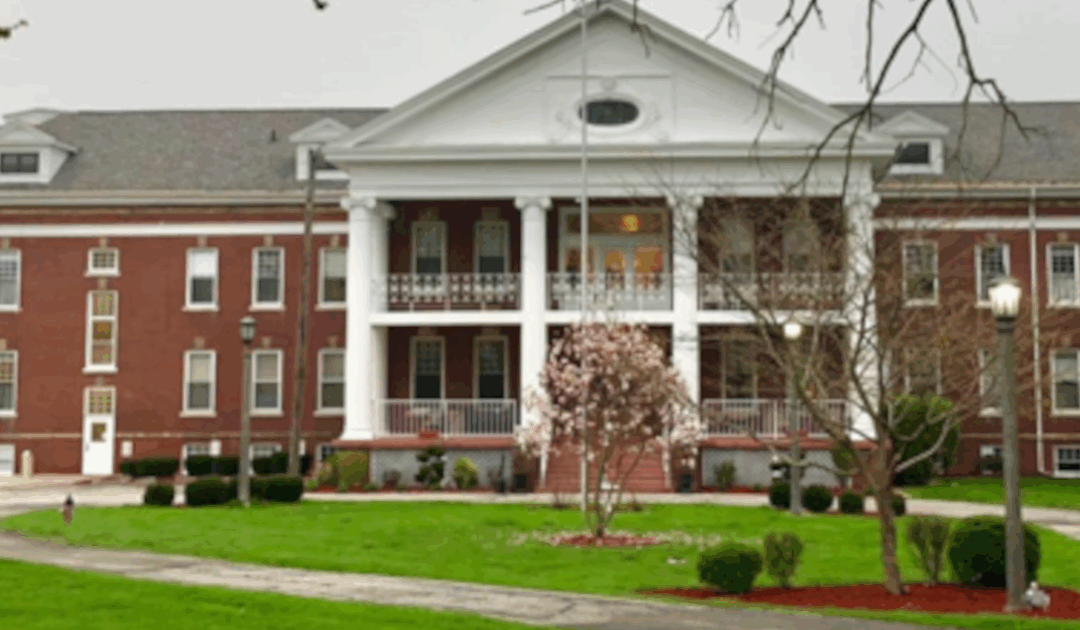
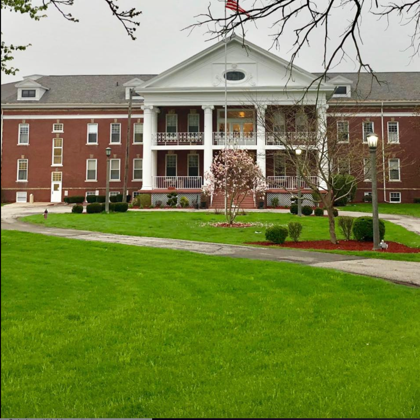
I share this letter submitted to the St. Joseph County Commission last November regarding the fate of Portage Manor. The County Council and the Commission voted along party lines to close Portage Manor in June 2023. It is fair to say the decision to close the home of people with mental illness and disabilities and relocate them elsewhere was not one of the County’s better moments.
Portage Manor is in my old neighborhood where I spent much time hiking along the St. Joe River and swimming in Pinhook Park. It is a wonderful 130-acre natural area with great potential as an open space extension of Pinhook Park and the Riverside Trail.
On November 12, 2025, in response to a proposal by St. Thomas More Academy to convert Portage Manor into a school, the County Council voted to direct commissioners to officially submit proposals for reopening Portage Manor.
While movement on Portage Manor is good news, the county is obliged to pursue an open, transparent call that considers the St. Thomas More Academy as well as any other proposals. My letter encourages such a call and for the Commission to conduct a selection process headed by a special commission comprised of respected community members, former Portage Manor family members and friends, as well as county officials.
If you care about Portage Manor’s future, please let your commissioner know!
November 21, 2025
St. Joseph County Board of Commissioners
St. Joseph County, Indiana
Dear Commissioner Baxmeyer,
I write to encourage the St Joseph County Board of Commissioners to enact St. Joseph County Council Bill No. 89-25 – Resolution Regarding the Future of Portage Manor. Specifically, I encourage the County Commission to pursue a process that underscores the portion of the bill stating, “Whereas county commissioners should be encouraged to consider this proposal in particular, as well as other public proposals, to protect Portage Manor’s longevity in St. Joseph County”.
Further, I encourage the County Commission to pursue an open, transparent call for proposals and conduct a selection process that helps to heal the wounds caused by the County’s decision to close Portage Manor. As I am sure you are aware, former Portage Manor residents, their families and friends, and many others in our community were harmed by this decision. That wound remains as does lingering distrust of county leadership.
Fortunately, the Commission can set a new course with the public as well as Portage Manor. I urge you to put aside the traditional decision-making process regarding county assets in pursuit of an open, inclusive process used by other communities in such special circumstances. Such a process and its ultimate outcome could help heal some of those wounds and build trust within the community.
The County could realize such an outcome through the establishment of a special commission comprised of respected community members, former Portage Manor family members and friends, as well as county officials. The commission would be charged with the development of selection criteria for proposals, and its use to evaluate and select a finalist.
I have direct experience with the effective use of such special commissions by the City of Tucson, Arizona. I participated as a commission member in the selection of proposals for the redevelopment of the Ronstadt Transit Center in Tucson, the city’s central bus transfer station. The center was besieged with problems of loitering, homeless residents, crime, and illicit drug transactions.
The city administration decided to pursue the transformation of the center into a mixed used development to include bus transfer, affordable housing, a hotel, and office use. The City’s intentions drew intense public criticism, so it chose to conduct the proposal selection process using a special commission to ensure open engagement and input from the larger community.
The commission included city and county transportation officials, local businesses, homeless advocates, transit users, and me as a representative of the President of the University of Arizona. In addition to receiving and reviewing proposals, the commission held several public meetings to solicit ideas and concerns. The process was successful in the selection of a redevelopment plan that met the established criteria including meeting financial feasibility. Equally important, the special commission approach helped to build a constructive sense of community ownership of the facility as well as greater faith in city leadership.
The future of the Portage Manor facility and the surrounding property, both wonderful community assets, needs to be addressed. By ensuring an open and consultative process, one that embraces its history and community, the County can address past harms while moving toward a positive future.
Best,
Jan Cervelli, FASLA, FCELA